Severe Weather Season Is Waking Up: What the Last 6 Weeks Are Telling Us
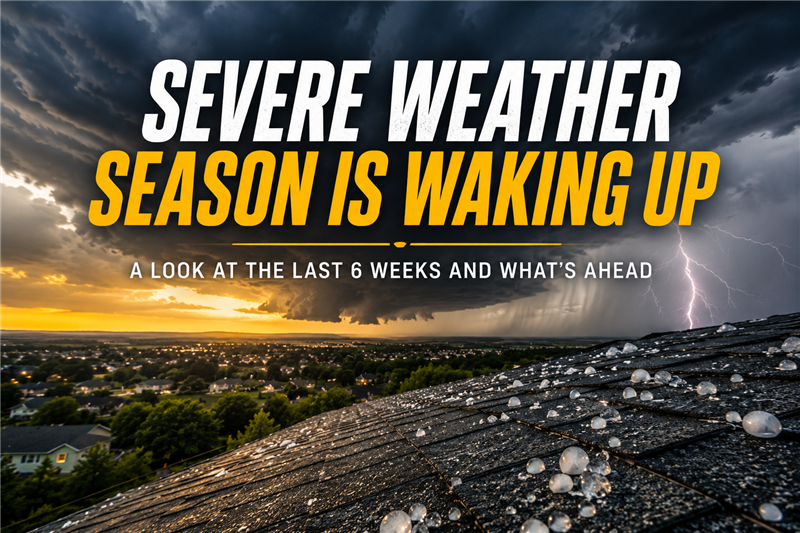
The last month has been a reminder that severe weather season doesn’t always arrive all at once. Instead of one continuous outbreak pattern, we’ve seen waves of activity — periods of explosive wind and hail followed by surprisingly quiet stretches. But the bigger picture is becoming increasingly clear:
The 2026 severe weather season is building.
Over the last several weeks, activity has steadily trended near to slightly above average nationally, with repeated bursts of significant hail and widespread damaging wind events stretching from Texas through the Midwest and into portions of the Eastern U.S.
Wind Has Been the Biggest Story
While hail activity has remained relatively average overall, wind reports have exploded at times.
One stretch earlier this month produced more than 1,000 wind reports in a single week — a level of activity typically reserved for June and July. Shortly after, another week generated nearly 2,000 wind reports east of the Rockies, approaching record territory for May.
These weren’t isolated events either. Wind impacts spread across huge portions of the country, creating widespread opportunities for inspections, assessments, and storm response operations.
Areas seeing some of the most consistent impacts included:
- Kansas
- Nebraska
- Iowa
- Northern Missouri
- Texas
- Portions of the Mississippi Valley
- The Southeast U.S.
Hail Activity Has Been Consistent — and Localized
The season has also produced repeated large hail events, particularly across the Central Plains.
Over the last several weeks:
- Multiple weeks produced 200+ major hail reports (2”+)
- Texas experienced several rounds of very large hail
- Siouxland and portions of the Midwest became focal points for accumulated hail swaths and likely insurance claim concentration
Rather than one dominant nationwide outbreak pattern, the season has featured shifting corridors of opportunity — forcing contractors and storm teams to stay agile.
Quiet Weeks Don’t Mean the Season Is Weak
One of the biggest takeaways from the past month is how inconsistent the upper-air pattern has been.
Several weeks recently received only “average” or even “below average” severe weather outlook scores despite isolated bursts of significant activity.
In fact, one late-May week received a severe weather score of just 1 due to extremely limited organized storm activity nationwide.
But quieter stretches this time of year don’t necessarily signal a weak season overall.
Historical comparisons from the PSAI Weather analysis continue to show that seasons starting near or slightly above average through April and early May often finish well above normal by the end of the year.
Peak Season Is Still Ahead
Meteorologically, the environment is entering the most favorable period of the year for widespread severe weather development.
Late May into early June historically represents the steepest seasonal increase in hail and severe storm reports nationwide.
Recent forecast discussions have already hinted at:
- Increasing instability patterns
- More favorable jet stream positioning
- Emerging target zones across Texas and the Dakotas
- Potential for larger, more organized severe weather episodes heading into June
While the past several weeks have been somewhat fragmented, the broader seasonal setup still points toward a potentially active stretch ahead.
What Contractors Should Be Watching
The last month reinforces an important trend:
Storm opportunities are becoming more regional and fast-moving.
Instead of relying on broad nationwide outbreaks, contractors are finding success by:
- Monitoring localized hail swaths
- Tracking wind-driven claim zones
- Reacting quickly to shifting storm corridors
- Staying positioned for short-duration opportunity windows
The companies that stay closest to real-time weather intelligence and localized storm data will continue to have the advantage as severe weather season ramps deeper into summer.
As we move into late May and early June, all eyes remain on the Plains, Midwest, and emerging southern storm corridors. The atmosphere may have taken brief pauses recently — but the season is far from over.
Tags

How Lutgen Companies Is Using Better Data, Better Marketing and One Platform to Build for Growth

How Tubbs by Grubbs Streamlined Marketing and Built a Platform for Growth

Meta Muse Shows Where AI Is Headed. Is Your Website Ready?

Staying One Step Ahead: How Liberty Roofing Is Building for What’s Next

From WeatherHub to a Complete Marketing Partnership
Subscribe to Predictive Sales AI, LLC's Blog

Comments